RSS
Showing posts with label civil stuff. Show all posts

Are We Now Trying To Compete With Nature?


Some say man's work cannot be on par with nature. But sometimes I feel "Is man trying to take the nature's job into his hands?"

This is because in some of the recent innovations in the last decade man has made sure he got rid of any obstacles if he had naturally and converted the surroundings to suit his needs. As a civil engineer it makes me think if this progress is for the good or bad?

Now consider the kansai airport in the Japan.  It was built in a place where none would have even dreamt of constructing anything some decades ago. It was built right on water. An artificial island was built some 3 kms away from the land. The challenges posed by nature like the clay soil strata in the sea bed, rough waves were all taken care of. This happened because the city had space constraints and needed to make an artificial island to house the airport.

an aerial view of the airport

The above example shows that man had created artificial islands to overcome some problem. But next is an example of a similar artificial island built for the bon vivant class.

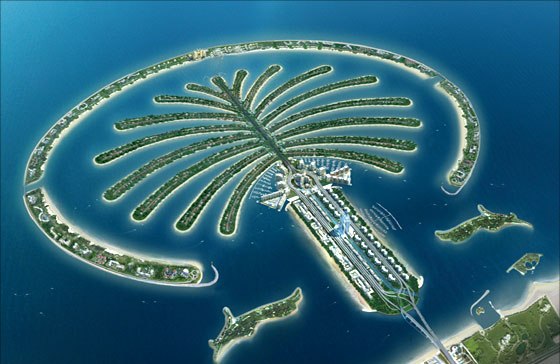
The palm islands of dubai ( palm jebel ali, palm jumeirah, palm deira ) were all constructed for hotels like burj al arab and some residential blocks. This new year also saw the opening of the  luxurious five star Rixos Palm Jumeirah hotel in Dubai.

The Palm Jumeirah Islands
Rixos Palm Jumeirah hotel

And now here is another one construction... the difference here being that it has been a concept from nature!

The Nautilus House in Mexico where the house is built resembling a shell! Have a look at it and think if there are anymore limitations for engineers... This poses no harm. But I want to show you how we are now capable of imitating the Nature. 


So from these few examples itself it is evident that man is capable of delivering high standards of engineering, by replication of nature's work. Some is commendable and helps mankind in it's progress. Some just for the sake of it... for showing uniqueness and superiority. Man must know that he has certain limitations. The works like the first one is absolutely necessary and more such engineering which will help the society must be done. But the others?

This doesn't apply just to the civil engineering field. I have covered examples from my field to make you understand the idea. But man has in all fields started challenging nature. Vegetables are grown the artificial way to make profits these days. The obstacles that nature posed for us is no more an obstacle. 

If we come up with innovations to help us it is good. But we must try not to meddle with the nature too much too! What say? Just a thought... :) 


Cheers! 

  • Digg
  • Del.icio.us
  • StumbleUpon
  • Reddit
  • RSS

Welcome 2012!

Hello friends! 

Hope the last year was eventful and good :) I was preparing for a competitive exam and so I was irregular in here. Starting this year you'll find more regular posts coming up in this space! 

The last year saw some awesome constructions coming up. Many records were broken and new records created! 

Here is a post that i made for Crazyengineer's official blog VoiCE which lists the achievements made last year in the industry which made civil engineers proud.

Hope you enjoy it! 

Happy New Year 2012! :D

Cheers! 


  • Digg
  • Del.icio.us
  • StumbleUpon
  • Reddit
  • RSS

here the flights land amidst water!!!

I think there will be no limits to innovations in civil engineering. Here is one mega innovation where the airport is constructed in the water!


"Need is indeed the mother of all innovations." Japan now has around four airports built of shore to cater to the demands also taking into consideration  the public convenience. 


Have a look at this picture.


This is the Kansai airport located on an artificial island in the middle of Osaka Bay in Japan, off the shore of the cities of Sennan and Izumisano.
The kansai airport was the first of this kind. The airport was constructed at some distance from the main land on an artificially constructed man-made island. The need for this offshore airport was mainly attributed to the developments in the Osaka to regain the economic power it had lost to Tokyo in the last few decades. The airport had threats from the typhoons and earthquakes. So the engineers had taken all this into consideration and designed this airport. The airport of size 4km by 2.5km was suggested. The terminal here spanning 1.7km is the longest terminal. 


Terminal Building


Sky Gate Bridge


The sea wall was made of rocks and tetrahedral concrete blocks. The island was made by filling 21,000,000 m3 of landfill obtained by excavating three mountains. The technical problem here was the soil below water was alluvial clay so the sinking of structure would be more. So the engineers decided to use sand piles. These sand would absorb the moisture of the clay. Though it had been filled more than required engineers predicted some sinking to occur. But here the sinking was more than expected leading to extra costs. It sank for 8m. The engineers suggested sliding joints for the aseismic deign. This worked most effectively. It was evident form the results obtained when japan faced the Kobe earthquake on 17 January 1995. The airport remained undamaged. The next test came in 1998 when the airport faced a typhoon with wind speeds of up to 200 km/h. The airport survived without any damage. The only connection of this island to the mainland was the sky gate bridge. It was completed on 1990 with a cost of dollar one billion. This trussed bridge carried the railway in lower level and the motor way in the upper level. 


The airport faced peak time traffic limits problems. so in 2003, the airport authorities suggested the construction of another runway with a terminal (4,000 m long). The second terminal was opened on 2 August 2007. 


Construction time-line:-
1987-construction started
1989-sea wall construction completed. 
1990-a 3km bridge was completed to connect the island to the mainland (rinku town)
1991-terminal building construction commenced
1994-airport opened.
2007-second runway opened. 


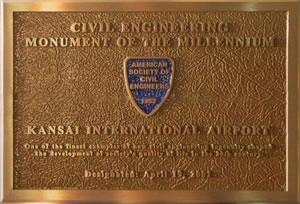
American Society of Civil Engineers (ASCE) selected Kansai International Airport in 2001 as one of the 10 civil engineering achievements. 


The techniques applied here with some modifications to prevent the excess sinking was applied in the construction of more airports like this which were New Kitakyushu Airport, Kobe Airport, and ChÅ«bu Centrair International Airport.


Thats how the need created a path for the wonder and this wonder was the inspired and made way for many more such structures! :)


Cheers!


  • Digg
  • Del.icio.us
  • StumbleUpon
  • Reddit
  • RSS

kudos to the budding engineers!

hello folks :D


it's a long time since I've made my last post. so here is one simple but marvelous engineering i recently learnt.


i had been to attend a civil engineering tech fest at IIT Madras (India) last week end. every year during this festival the students make it a point to make some engineering project which is not easy and display it. this year's marvel (the name they give the projects) was a inflatable rubber dam.


this inflatable rubber dam is just a tube like structure made of a hard rubber like material. the material is a multi layer fabric made synthetic fibre which may be rubberised on one or both sides and possibly coated with a plastic film. they are made to a cylinder like structure after initial scrubbing to make the material hold tight when glue is applied. then the edges are firmly stuck and pressed to remove any locked air bubbles. then the circular shapes of the same material is cut and pasted to the sides. now this is the basic structure of the inflatable dam.


this bag like structure is then filled with air or water or both. there is an opening on top for this purpose.this structure is then anchored to the base of the dam. in this case the students used glue as it was sufficient for the size they were building. when the air is filled it inflates and holds itself to the sill of the dam. it hence is capable of working as a weir or barrier to water flow.


it has its own advantages and disadvantages. being cheap, easy to construct are its advantages. the disadvantages are the facts that they are vulnerable to damage by people, life span of 20 years.


a graphical picture showing a rubber dam acting as a barrier. 


a rubber dam.

it was an awesome effort by the civil engineering students of IIT. cheers to them :D


  • Digg
  • Del.icio.us
  • StumbleUpon
  • Reddit
  • RSS

Anybody wants to go green?


For those who love to stay close to nature, Roof garden may be the closest option these days. In the present scenario where most of the people in urban areas live in apartments, having a garden will seem out of question. The main constraint is the space which the builders claim they can use to build another whole block.

A few decorative items and good choice of plants will make a world of difference. It does not only change the looks of the surroundings but also alters the environment. The gardens can be located in two places. One is the balcony and the other alternative is the roof.

ROOF GARDENS:
The roof gardens are aimed at cooling the building and reducing the load on the cooling systems and hence making the building green. A green roof is a roof of a building which is covered with vegetation and soil, or a growing medium, planted over a waterproofing membrane. 

This concept was developed in Germany in 1960s.Green roofs are made up of a system of manufactured layers, placed one above the other over roofs to support growing medium and vegetation. Green roofs are categorized as intensive, semi-intensive or extensive, based on the depth of planting medium and the amount of maintenance they require. The green roofs protects against heat ingress through the roof.

The roof gardens/green roof can also be made to serve another purpose. They can be laid at a proper slope in such a way that they provide proper drainage for the water falling in the roof. Thus the water can be put to proper use without many other expenses like the piping for the rain water harvesting and other alternates. This roof garden can also be used to unleash your creativity. You can experiment with potted plants or grass carpet or garden accessories.

The other check points in order to make this green movement even louder is to use terracotta pots instead of plastics, use solar powered lights, use the grey water from kitchens for gardening.

BALCONY GARDENS:
The balcony gardens can be designed based on the size of balcony available. If the balcony is big then we can have rows of plants. But we can have alternate ideas if you have a small balcony. We can go in for vertical gardens in that case. One way of having Vertical garden is to have strong threads connecting the base and the roof. Then the creepers can be allowed to grow on it.

But not all plants can thrive in every environment. Experts have analyzed the plants that can be grown based on the direction of the balcony. They are as follows:
North facing (less or no sunlight) - dieffenbachias, aglaonimas, philodendrons (bushy and climbing) and marantas (suitable for humid climate).
East facing (mild sunlight)-african violets, hibiscus, foliage plants like chlorophytum, eranthumum and aralias.
South and west facing (plenty of sun)- plumbago, bougainvillas, ixoras, button roses, hamelias, gulphimia, clematis.

Use soil that are porous and retain all the moisture which is supplied to it. It is also essential to use the well decomposed manure. With all this and proper water proofing of the floor your house is ready for the roof garden you always wanted.


cheers!


  • Digg
  • Del.icio.us
  • StumbleUpon
  • Reddit
  • RSS

Fountain of Wealth

 “Water is the symbol of life and wealth, and the inward motion of the 
water symbolizes the retention of wealth”

this is the concept behind one of the most beautiful fountains ever built. the structure that i'm talking about is the "fountain of wealth" situated in the suntec city of Singapore in the middle of a lot of shopping malls. It recorded in the 1998 edition of the  Guinness Book of Records as the world's largest fountain made of bronze. 


when we have a look at the fountain we see that the water is flowing downwards and inwards. according to Chinese feng shui this symbolises water as a symbol of wealth and also the water falling inwards symbolizes retention of wealth. visitors from all over the world visit this fountain for good luck.


during the day there will be no water flowing in the fountain and people can walk to the centre point which is a good  feng shui point and wish for good luck. in the nights there will be laser shows and nusic shows in there. 

as already mentioned the fountain is made of brass. the circular ring is of circumference 66m. the base of fountain is at the basement level and the circular ring is situated at the ground level and the fountain has a height of 13.8m. this ring is supported by four slanting columns also made of brass.


this fountain was built with an aim of providing sufficient visual impact which the buildings surrounding it would not be able to do alone.


the other interesting aspect of this structure is it has five buildings surrounding it. these buildings represent the  thumb and other four fingers of the left hand. so this fountain forms the palm of the hand. this fountain plaza now focal point of the suntec city and heart of marina centre area. 


Below ground, at the Fountain Terrace, all the buildings are interconnected by shops and restaurants. The complex is also connected to its neighbours by both underground and street-level pedestrian linkways.

that's all that made this out of the box thinking a wonder! :D


this fountain festured in the asia amasing race 1 & 3. It was featured in the Indian hit movie, Krrish, when Krrish played by Hrithik Roshan used it as an observation point to locate the position of his Nemesis's helicopter that he is chasing. ;)


i've just stumbled across the website (www.360cities.net) that provides 360 degree panoramic view of many places. this view should allow you to understand what i said even better. :D


Fountain of Wealth in Singapore


cheers!

  • Digg
  • Del.icio.us
  • StumbleUpon
  • Reddit
  • RSS

How fast do you think a building could be built?

With new technologies and innovations taking over in the various fields the world is moving at a very fast pace. In construction field, the prefabricated constructions is the new rule. 


These prefabricated parts like beam, column, floor slab, etc. are manufactured in the factories and transported to the construction sites. Then by simple assembling process, the building rises at a very fast speed that none could have foreseen. some buildings that proudly show this fact are the The New Ark Hotel in china, the rotating towers of dubai, london, paris, etc.  


the following video shows the construction progress in the changsa, china leaving the place with a 16 storey  building in less than 6 days. the frame of this 50m high building is capable of withstanding a magnitude nine earthquake. just see the clock ticking by in the left corner of the video. it is an amasing work!


The next is the rotating tower which is based on the dynamic architecture. dynamic in the sense each floor rotates at a constant speed individually. they have introduced a fourth dimension called time, which makes it unique. this skyscraper also uses only the prefabricated structures. 90% of the construction is completed in the factory and it is calculated to take only 22 hours to construct this sky scraper. 


The world record for building a house stands at 3hr 26min 34sec, set by a team in Alabama.


The prefabricated structures have changed the world and brought about buildings that don't require any concrete! I wonder what the next step in the construction industries would be!


cheers!


  • Digg
  • Del.icio.us
  • StumbleUpon
  • Reddit
  • RSS

the thursday challenge is "construction"!

This Thursday challenge is "Construction". And i was excited the moment i read the topic :D this was one topic sculpted for me! (don't start pelting stones at me ;)) :mj

we had done a model of a building showing the ways in which it could be made "green". our class as a whole accepted the work and we started of planning.:d once done with it we got all the plywood, paints, nails, saw, hammer, markers, etc. then started the best part putting the plan together.:rainbow :$ we had a group of girls marking the lines for doors, windows, ends of walls, etc. and the boys taking the saws in their hands. have a look at it... 8)


stage 1: discussing the plan and marking. 8|

stage 2: nailing the plywoods together and painting them (1st coat)

stage 3: after second coat of paint our "building" is transferred from the "manufacturing" site to the final site.


our final product! :h


back elevation.


dedicated to the whole class who enjoyed doing it :D III year civil students of MSEC... this is for you :b


Cheers!

  • Digg
  • Del.icio.us
  • StumbleUpon
  • Reddit
  • RSS

My first Blog post in CE VoiCE!

I have been regularly reading the articles published in the CE-VoiCE which is the official Blog of the Crazyengineers website. I had wanted to write blog posts on the civil engineering topics at the VoiCE and so submitted my first blog post.

Here it is : The Pearl Bridge

Guys do read it :) that's construction project is engineering at it's peak!

The thing i liked the most about it is they employed their own country men for all jobs right from the foremen to the project head. Even the softwares and technology they used were what they invented themselves. They didn't depend on the best people from other nations and took the job in their own hands. That's what i admire about these Japanese. And they mad it a point to have precision to the millimeter scale in this project. :D ISN'T THAT GREAT ENGINEERING?

cheers!

  • Digg
  • Del.icio.us
  • StumbleUpon
  • Reddit
  • RSS

My first Architectural plan

i had done some drafting of floor plans for my uncle earlier. but this was the first time i did it with full enthusiasm and this is more professional than the earlier ones. but this is not the best plans. this is the best for students like me :D these were not planned by me. i just did the drafting part.:) here are some screen shots of the draft in autocad.


ground floor plan


first floor plan

cheers!
CP

  • Digg
  • Del.icio.us
  • StumbleUpon
  • Reddit
  • RSS

Traditional Architecture.

Buildings are the Worst Killers than the Earthquake. Earthquakes don’t kill; badly built houses do.. 
In certain hilly areas there were many traditional methods of construction which could allow the buildings to withstand the high intensities of earthquakes. 
I would like to brief you guys on one such ancient design of a structure in the hilly regions which has stood through the time without destroying when the earth quakes strike.

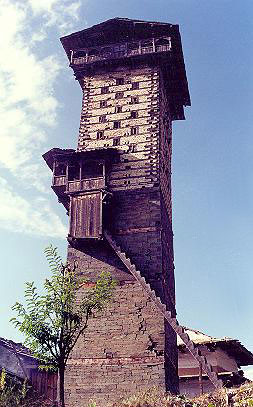
The building I’m taking about id “CHAINI KOTI TEMPLE” or “kath kunni” as it is locally known. This building lies in the himachal Pradesh in India. it is more than 5oo years old. These are actually built as temples for the local deities but became watch towers during wars.


The Chaini Koti temple is a tower style temple. that the verandah all around extends beyond the walls to form a cantilevered structure. Even the staircase is cantilevered.


Chaini Koti temple is a stone temple rising 26 metres at 2,200 metres above sea level Himachal lies inseismic zone 4 and 5, and the seven-storey Chaini Koti temple uses stone, wood and indigenous structural engineering to withstand the forces of nature. The main aspect of this structure is “the aesthetics of using local wood and stone without any cement plastering in this pristine backdrop.” Known as kath kunni, or wooden corners at right angles, this stone-and-timber technique delivers quake resistance comparable to modern construction science.

The temples are also repositories of traditional knowledge and materials. 
The main aspects of this design is:
  • Deodar, wood of the gods found in the Himalayas, is insect and borer resistant; it can also take extremes of rain and snow. Its timber, which can bear lateral stress, is ingeniously crafted by traditional master masons. That’s why the nail-less and cement less towers have been holding out against ground tremors for 500 years.
  • Quake resistant houses should have tie-bands (to act like beams) just above the level of the floor, the level of the doors and windows, and another at the roof level.
  • Corners are the most vulnerable and ought to be strengthened. Elasticity of the structure can be enhanced with flexible steel rods or wood batons at corners.
  • Doors and windows should be few, small and symmetrically placed away from the corners.
  • The house should be as light as possible.
  • it has a heavy base or plinth, which keeps the centre of gravity within the base.
all this has allowed this structure to remain unharmed even in during the hard earthquakes.

such ingenious architecture has been implemented even when our ancestors didn't formally have engineering qualifications. Hats of to them :)

Cheers,


  • Digg
  • Del.icio.us
  • StumbleUpon
  • Reddit
  • RSS

world's tallest clock tower

The Mecca Clock Tower (Abraj Al-Bait Towers) will be more than 600 meters tall and six times the height of London's Big Ben . 

The front side of the clock is adorned with glass mosaic and made of carbon fiber -- a highly-resilient material used in various technologies such as aerospace. 

The two main faces of the clock are 43 meters squared each, with the other two faces measuring 43 by 33 meters. 


it is under construction and is expected to be completed by this year end.  The hotel tower is topped by a four-faced clock. The tallest tower in the complex will also contain a seven-star hotel to help provide lodging for the over five million pilgrims who travel to Mecca annually to participate in hajj.


a elevation of the clock tower


a phase of construction of the clock room  


construction of the dome above the clock


a Arial view of the clock and dome


Magnificent na? 


  • Digg
  • Del.icio.us
  • StumbleUpon
  • Reddit
  • RSS